

Reading time: 9 minutes
Shopify is turning AI assistants into new product interfaces: customers can discover offers in ChatGPT, Google AI Mode and Gemini, Microsoft Copilot, Meta, or Shop, and in some cases, purchase directly there.
For merchants, this does not create an autonomous sales channel that they should just let run. The following questions show which settings, data, and boundaries are crucial for a controlled launch.
In brief
✓ Agentic Storefronts are active by default for eligible shops.
✓ Shopify can automatically enable new AI channels for your shop.
✓ Complete product data improves the chances of matching recommendations.
✓ Direct checkout is not available in every AI channel.
✓ Search previews and rankings are indicators, not a guarantee of sales.
FAQ on Shopify Agentic Storefronts
What are Shopify Agentic Storefronts?
Agentic Storefronts make your products available in AI-powered shopping environments. There, users state a need in natural language, and the respective agent can search, compare, and recommend matching products.
Depending on the channel, Shopify transmits the required product information via the Shopify Catalog or a connected sales channel. For Google AI Mode and Gemini, for example, provisioning is done via Google & YouTube, and for Meta, via Facebook and Instagram by Meta.
Are AI channels automatically enabled?
For eligible shops, the setting Allow Shopify to manage is enabled by default. This gives available Agentic Storefronts access to your products, enables supported direct checkouts, and allows new channels to be added automatically.
This is convenient, but it expands the range of storefronts without requiring individual decisions. If you want to intentionally approve product data and checkout paths, you should disable automatic management and review each channel separately.
Practical Check
In the Shopify admin area, open the Sales Channels section and then Agentic. There, check not only the currently listed channels but also whether the automatic inclusion in future storefronts aligns with your data and sales strategy.
Can customers order directly in the AI chat?
That depends on the respective channel and your shop's eligibility. Google AI Mode and Gemini, Microsoft Copilot, and Meta can offer a Shopify-powered direct checkout, provided the feature is available and enabled for the shop.
ChatGPT currently works differently: The channel supports product discovery via Shopify but redirects the purchase to your online store's checkout. This opens in an in-app browser or in a new tab when using a web browser.
Even with a direct checkout, orders remain visible in the Shopify admin area and are attributed to the channel. Shopify continues to describe merchants as owners of the customer relationship and post-purchase experience.
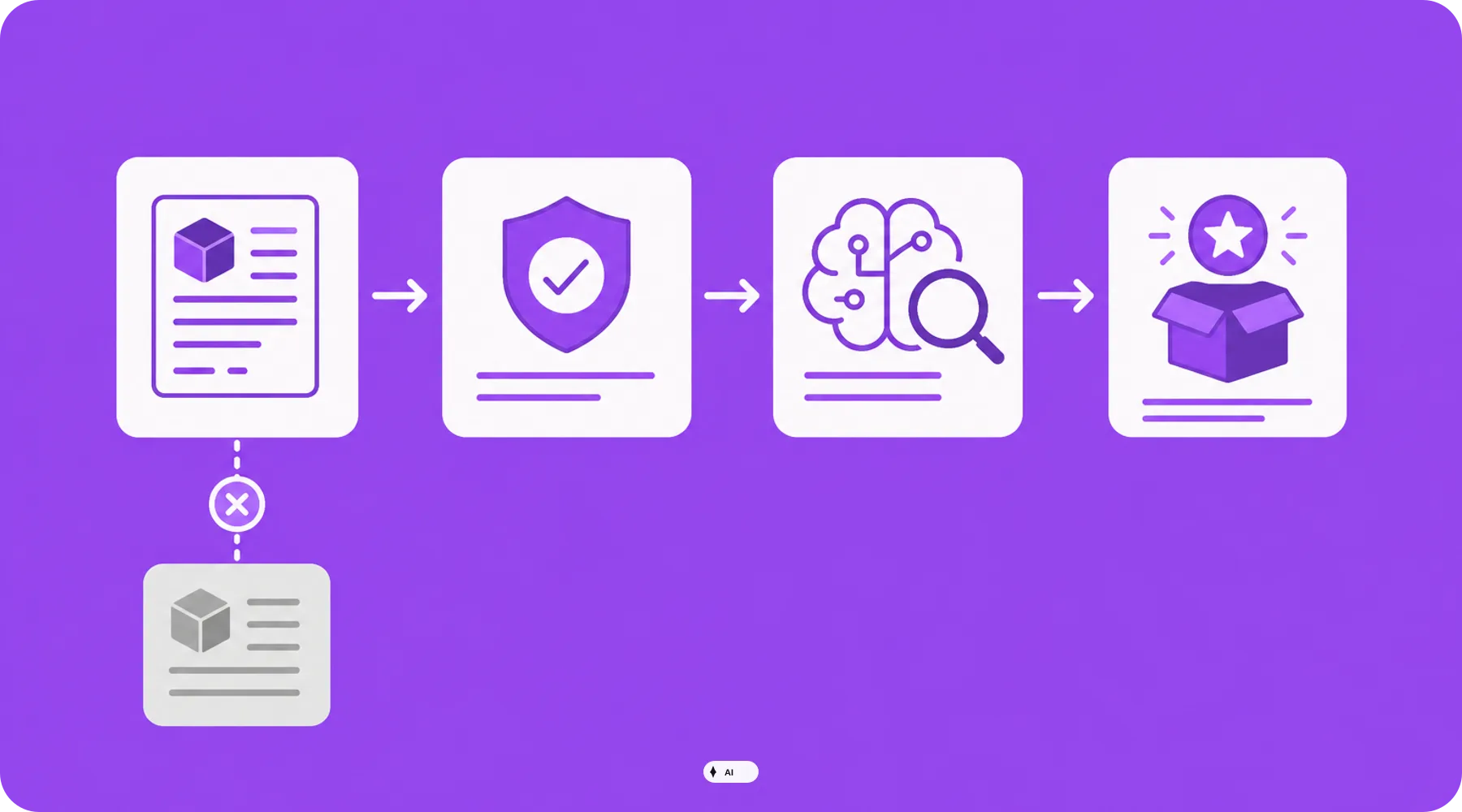
What product data do AI agents see?
Via the Shopify Catalog, information such as product titles, descriptions, options, images, prices, and availability can be provided. Pricing and inventory data are continuously updated so that agents process the most current offers possible.
Custom data structures require special attention. If important properties reside exclusively in custom fields or external systems, you should check whether the Catalog mapping captures this information correctly.
What data does a channel receive during direct checkout?
When an order is placed via direct checkout, the respective AI channel receives the necessary order details. This can include the buyer's name, email address, phone number, and physical address.
However, according to Shopify, the channel does not gain access to the complete order history, the general customer database, or protected information from the admin area. Nonetheless, as with any additional sales channel, you should document and consciously decide on this access internally.
Important
Catalog access and direct checkout are two different decisions. You can make products discoverable in an AI channel and still direct the purchase to your own online store, provided the respective channel supports this separate control.
What influences discoverability in AI channels?
In the Agentic section, Shopify provides a search preview. It shows how products might appear in the Shopify Catalog for selected search queries and how competitive offers are compared to other Catalog products.
Shopify names several adjustable quality signals: detailed descriptions, sufficient image coverage, verified reviews, complete variants and options, as well as existing shipping, return, and refund policies.
Therefore, the most effective optimization is not to pack as many AI keywords as possible into product descriptions. Instead, products should describe features, use cases, materials, sizes, colors, and limitations so clearly that an agent can match them with a specific customer intent.
Is the search preview a reliable ranking test?
No. The tool shows raw results from the Shopify Catalog and is suitable as a diagnostic aid, not as an exact preview of every AI channel.
External agents can re-evaluate results based on their own logic. In addition, signals such as brand awareness, popularity, and customer interaction play a role, which cannot be replaced in the short term simply by filling out individual product fields.
Which search queries should merchants test?
Do not just test product names or previous SEO keywords. More meaningful are naturally phrased purchasing intents that bring together product type, intended use, target audience, features, and potential constraints.
For example, a running shoe store could search for a model for wide feet, longer asphalt routes, and rainy weather. If the results are not correct, you should first check for missing or contradictory product data instead of hastily generating additional promotional copy.
Can individual products be hidden from AI agents?
You can revoke access for external Agentic Storefronts via the Shopify Catalog. However, this does not necessarily prevent publicly accessible product pages from being found through ordinary web crawling or other data sources.
Setting the product status to Unlisted or hiding it accordingly via Shopify can achieve a more comprehensive block. However, the product will then also disappear from sitemaps, search engines, and the internal online store search, which is why this measure should not be treated as an isolated AI switch.
A robots.txt block does not fully solve the problem either: it affects crawling on the open web but does not stop data transmission via the Shopify Catalog to enabled Agentic Storefronts.
What do B2B shops need to pay special attention to?
According to Shopify, Agentic Storefronts support D2C sales. Pure B2B products are excluded if Shopify can reliably identify them using B2B catalogs, mandatory authentication, or a password-protected storefront.
Custom B2B solutions via apps or theme customizations are critical. If these merely hide prices or content using their own logic, Shopify may not recognize a product as B2B-exclusive and may display it in an AI channel.
Products sold to both business and retail customers will appear with the configured D2C price. Therefore, review mixed assortments, customer-specific pricing, and confidential wholesale offers with particular care before enabling them.
What performance data does Shopify provide?
In the Agentic section, merchants can analyze sales, orders, online store sessions, and online store conversion per channel, among other metrics. Sales figures can include both referred purchases and orders placed via direct checkout.
For headless shops, Agentic performance analytics are currently not available, according to Shopify. These merchants therefore need their own tracking strategy for referrers, checkout entries, and orders.
Do Agentic Storefronts replace SEO, feeds, or shop optimization?
No. While the product data foundation overlaps with classic search engine and feed optimization, AI channels form an additional intermediation layer with their own selection and presentation logic.
A fully maintained Catalog creates the technical prerequisite but guarantees neither visibility nor recommendations. Price, availability, brand trust, reviews, and actual relevance to the query remain critical factors.
What are the realistic limits of automation?
Shopify automates the structured delivery and updating of a lot of data. However, the platform does not decide which products should strategically appear in which AI channels, whether a direct checkout fits the brand, or whether descriptions are correct in terms of content.
AI agents can also interpret ambiguous queries differently than expected. Critical products, assortments requiring intensive consulting, and offers with complex compatibilities therefore require particularly clear data as well as regular spot checks.
What shop owners should check now
✓ Check whether Agentic Storefronts are already active in your shop.
✓ Decide if Shopify is allowed to automatically add new AI channels.
✓ Review Catalog access and direct checkout separately for each channel.
✓ Test real, naturally phrased purchase queries in the search preview.
✓ Complete descriptions, images, variants, and shop policies.
✓ Check B2B products and custom price or access restrictions.
✓ Regularly compare sales, orders, and sessions for each AI channel.
Start with your high-selling products or those requiring explanation. A small, controlled sample will reveal more quickly if there are data gaps, confusing variant names, or unsuitable channel options.
Thinkideas View
Do not leave Agentic Storefronts unattended just because they are enabled by default. Maintain product discovery for now, turn off automatic channel additions, and only enable direct checkouts after a documented test of data quality, attribution, and the post-purchase process.
Conclusion
Shopify Agentic Storefronts can create reach in AI-assisted shopping situations, but they make clean product data and intentional channel settings more important than ever. The Shopify Catalog is the foundation for this, not the guarantee for recommendations.
First check your default permissions and then test specific customer queries. Only when presentation, prices, variants, and checkout paths are correct should you expand the usage to additional products and AI channels.


