
Reading time: 7 minutes
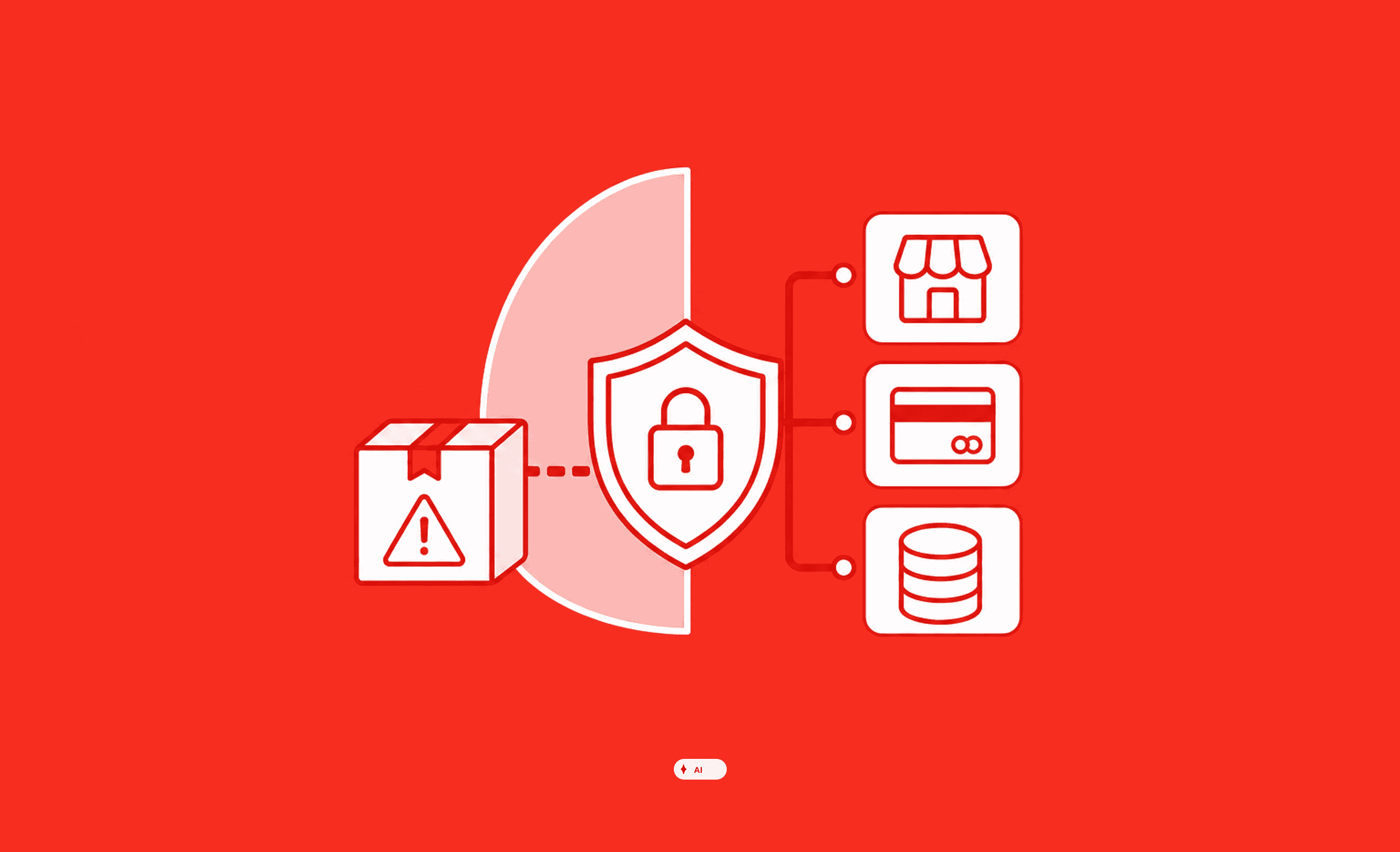
A red risk indicator is not yet proof of fraud. It is a signal to check the payment, customer details, and shipping before goods leave the warehouse.
This FAQ shows how to translate Shopify fraud analysis into a robust approval process and avoid unnecessary cancellations.
In brief & compact
✓ The risk level alone should not trigger an unchecked shipping decision.
✓ Shopify indicators explain anomalies, but do not quantify the probability of fraud.
✓ Manual payment capture creates review time, but changes your entire payment process.
✓ Shopify Flow must wait for the completed risk analysis.
✓ High-risk orders should remain on hold in fulfillment until a documented approval is issued.
What does the Shopify fraud analysis show?
The fraud analysis evaluates online credit card orders based on available payment and order data. Depending on the setup, Shopify displays individual indicators and additionally a recommendation with low, medium, or high risk.
Possible indicators include results of address and security code verification, IP address information, and indications of multiple credit cards being used. Green, red, and gray icons help with categorization but do not replace an overall decision.
Is the analysis identical in every Shopify store?
No. With Shopify Payments, fraud recommendations are available in the regular Shopify plans. For many external payment providers, however, the scope depends on the plan and the data that Shopify can check for the respective transaction.
Shopify cannot provide a recommendation for offline-processed payments and certain other order types. Therefore, also check their own risk signals and limitations with external payment providers.
Important
A red indicator does not automatically mean that the order is fraudulent. However, several consistent anomalies, a high order value, and shipping that is difficult to retrieve increase the need for review.
When should shipping be stopped?
First, stop fulfillment if Shopify reports a high risk or if several difficult-to-explain signals come together. This applies particularly to express shipping, differing delivery addresses, unusually large quantities, or easily resellable products.
The stop should be set up as a temporary check, not as an automatic accusation of guilt. Define internally who will check the order, which proofs are acceptable, and by when a decision must be made.
Is a medium risk enough for a shipping stop?
Not as a general rule. In the case of medium risk, the order value, product sensitivity, and previous order history should determine whether a manual check is necessary.
A known existing customer with consistent data can be treated differently than a first-time order with express shipping and multiple payment attempts. Use fixed criteria so that employees decide comparable cases in the same way.
Should the payment also be put on hold?
Manual payment capture can prevent an authorized credit card payment from being debited immediately. This leaves time to check the fraud analysis and subsequently either capture the payment or cancel the order.
However, this setting affects your general workflow for supported online store payments. Individual additional payment providers may not support manual capture and may continue to capture payments automatically.
What must be clarified before the changeover?
Check which payment methods are affected, who monitors open authorizations daily, and how orders are released in time. Without clear responsibility, a security gain can quickly lead to delayed capture, expired authorizations, or unnecessary delivery delays.
Practical Check
Test manual capture with every relevant payment method, your ERP system, and the connected fulfillment. A setting in the Shopify admin area does not protect you if a downstream system already automatically transmits the order to the warehouse.
How does Shopify Flow automate the check?
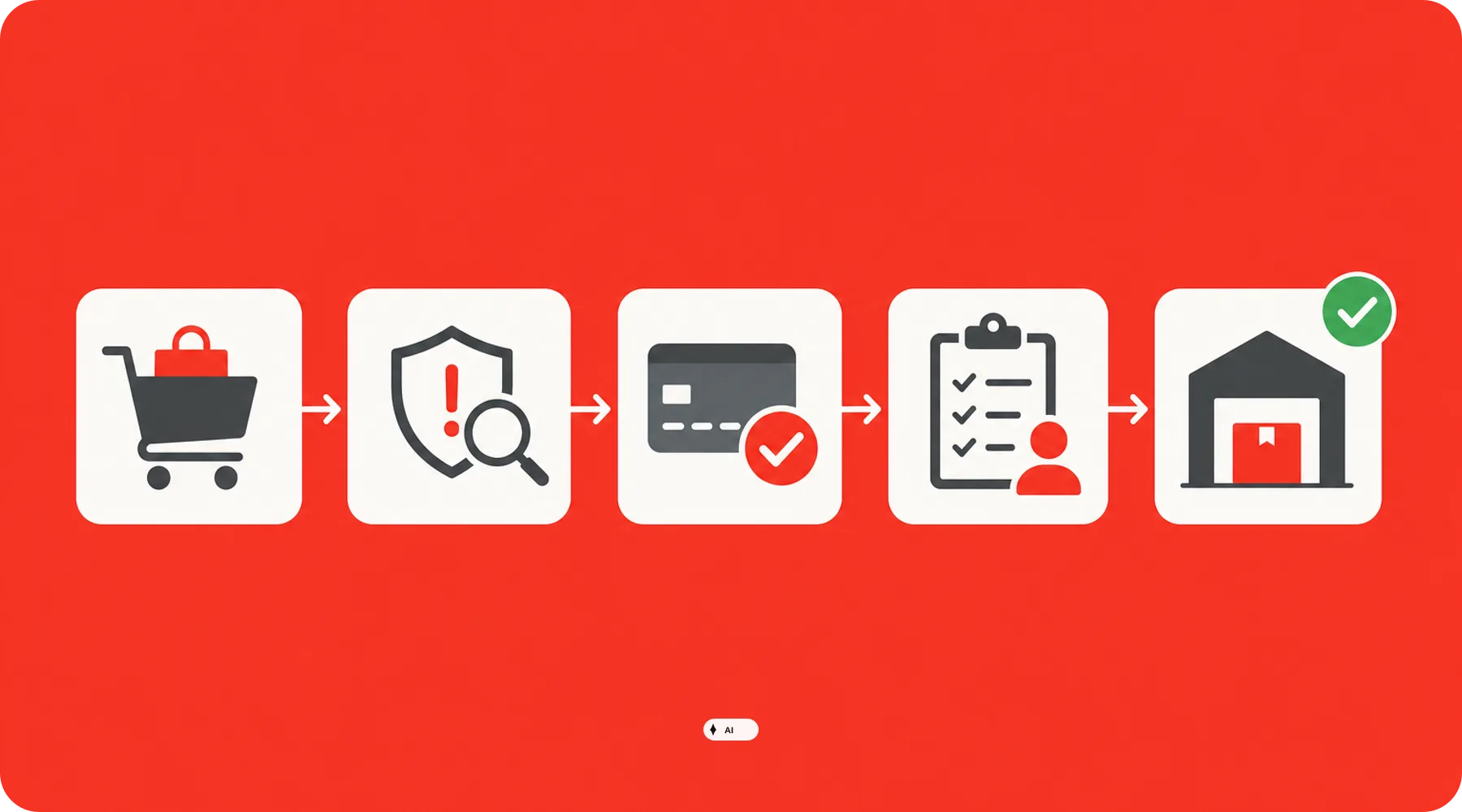
For risk-based workflows, Shopify Flow should use the trigger Order risk analyzed. The trigger Order created is unsuitable because the risk analysis does not have to be completed at this point.
After the analysis, Flow can, for example, hold fulfillment, notify internal teams, set tags, capture payments for orders without high risk, or cancel high-risk orders. Shopify also provides templates for this.
Why is automatic cancellation risky?
Even a high risk level can affect a legitimate order. Immediate cancellation without further criteria can therefore hit good customers, generate support effort, and cost revenue.
A two-stage workflow is usually more robust: Flow holds the order and passes it on to a manual check. Only clearly defined patterns should be cancelled automatically.
What must happen in the warehouse process?
The status On Hold must be visible and effective in all connected systems. Check fulfillment apps, external warehouses, ERP connections, and automatic shipping rules in particular.
An internal notification should contain the order number, risk level, and responsible person. Sensitive payment details belong neither in emails nor in freely accessible team chats.
How is a suspicious order checked?
First, open the complete fraud analysis and look at the indicators together. Discrepancies between IP location, billing address, and delivery destination may be relevant, but are not automatically suspicious in the case of travel, gifts, or corporate networks.
Then check the order history, payment attempts, shopping cart, shipping speed, and contact details. If a query is necessary, use the contact details stored in the order and do not request full card details.
Which decision should be documented?
Briefly record which signals were checked, who gave the approval, and why the order was shipped or cancelled. This documentation improves subsequent process reviews and can help in the event of a chargeback, but does not replace suitable evidence.
The decision on a chargeback is ultimately made by the card-issuing institution, not Shopify. Even a cancelled or uncaptured payment does not always prevent an authorization from being disputed.
When do rules in Shopify Fraud Control help?
The Fraud Control app can use additional checkout rules for shops with Shopify Payments. This allows, among other things, certain email, address, or IP characteristics to be filtered before a checkout becomes an order.
Such rules should be narrow and regularly checked for false blockings. They offer no guarantee against fraud or chargebacks and can prevent legitimate purchases if the criteria are too broad.
Which rules are particularly error-prone?
Blanket blocks of entire regions, email domains, or shared IP addresses quickly generate false positives. Concrete, proven patterns from your own fraud cases combined with other risk signals make more sense.
Operating Rule
Every blocking rule requires a responsible person, a documented reason, and a date for re-evaluation. Rules without measurable benefit should be removed instead of being carried along permanently.
What shop operators should check now
✓ Check for which payment methods Shopify provides a complete fraud recommendation.
✓ Ensure that high-risk orders are placed on hold before being transferred to the warehouse.
✓ Use the Order risk analyzed trigger in Shopify Flow.
✓ Fully test manual payment capture and fulfillment holds with all interfaces.
✓ Define fixed criteria and a responsible person for manual approvals.
✓ Regularly review Fraud Control rules for blocked legitimate checkouts.
Thinkideas View
Do not automate the cancellation prematurely, but first automate the secure stop. A flow that reliably holds high-risk orders and guides them to a clearly assigned review is more robust for most stores than aggressive blocking rules.
Conclusion
Shopify fraud analysis only becomes effective protection when payment, approval, and fulfillment are organized as a shared process. Individual red indicators or blanket rules are not enough for this.
As a next step, test a high-risk order from checkout to warehouse transfer. This way, you can see if your shipping is actually waiting until a documented release is available.


