

Reading time: 6 minutes
Many small payment attempts, an unusually high number of declines, and suddenly appearing high-risk orders can indicate card testing. This is when automated scripts test stolen card details through the checkout.
The following checklist combines immediate measures with a resilient process for payment, fulfillment, and escalation.
Quick & Compact
✓ Frequent small transactions and rising payment declines are typical warning signs.
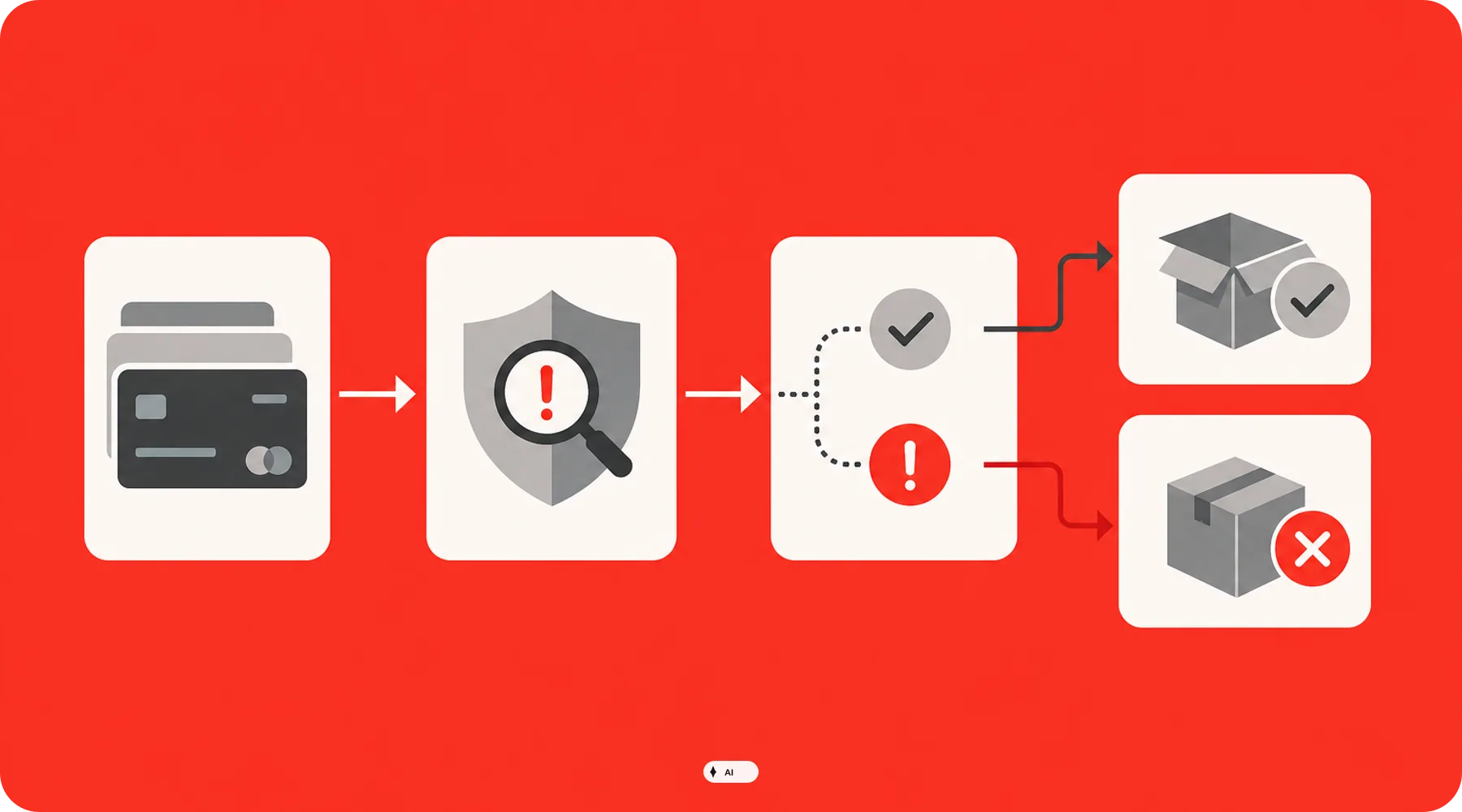
✓ Suspicious orders should not automatically proceed to fulfillment.
✓ Manual payment capture creates time for verification, but does not prevent every chargeback.
✓ Shopify Flow and Fraud Control can automatically handle defined risk patterns.
✓ Rules must be tightly defined and regularly checked for blocked legitimate purchases.
Reliably Detecting Card Testing
1. Check payment attempts against your baseline
Do not just evaluate the number of successful orders. An attack can first show up as a sudden spike in declined transactions, recurring small amounts, or many attempts within a short time window.
Compare the activity with a normal period of the same day of the week and same time of day. Seasonal peaks, campaign launches, and technical checkout tests must be ruled out as possible legitimate causes.
SignalPossible MeaningVerification StepMany small payment attemptsAutomated testing of card dataCompare amounts, intervals, and productsSuddenly more declinesInvalid or blocked cardsCheck payment and checkout trendsMultiple cards per orderRepeated validation attemptsOpen indicators of fraud analysisRecurring IP or address patternsCoordinated series of attemptsMatch orders and abandoned checkoutsNew high-risk ordersIndividual tests were successfulStop payment and fulfillment immediately
2. Do not evaluate order risk solely by color
Shopify Fraud Analysis can show AVS and CVV results, IP details, and the use of multiple cards, among other things. Individual red indicators are a reason for verification, but not yet automatic proof of fraud.
The decisive factor is the pattern of order value, payment attempts, address, IP signal, and past customer behavior. If an analysis is still pending, hold off on fulfillment until the result is available.
Practical Check
Establish internally who checks payment anomalies and who is authorized to stop orders. Without clear responsibility, an order may automatically continue to the warehouse, dropshipping partner, or fulfillment service provider despite visible risk signals.
Immediate Measures During an Attack
3. Stop fulfillment of suspicious orders
Hold high-risk orders and check if orders have already been transmitted to external systems. Cancel or void confirmed fraudulent orders before shipping if possible, and return reserved items to inventory in a controlled manner.
A cancellation can reduce the risk, but does not guarantee preventing a chargeback. Even an authorization hold can be reported as unauthorized by the actual cardholder.
4. Control payment capture
Manual payment capture buys your team time before funds are collected for an order. It is particularly useful if orders are otherwise paid, released, and transmitted to fulfillment immediately.
Treat the switch as a controlled emergency measure and document the way back to normal operations. Also, check authorization deadlines so that legitimate payments do not expire due to delayed processing.
5. Target and block recurring characteristics
With Checkout Rules from Fraud Control, Shopify Payments merchants can filter defined email, IP, and address characteristics. Use combinations of specific characteristics where possible, instead of blanketing large regions or broad customer groups.
Then check the abandoned checkouts. Blocked legitimate buyers are a signal that a rule is formulated too broadly and should be adjusted or deactivated.
Important
Fraud Control does not guarantee protection against chargebacks. The rules only react to the conditions you specify and do not replace fraud analysis or a documented manual check.
Automating Protection Permanently
6. Set up Shopify Flow with clear risk levels
Shopify Flow can tag, hold, cancel, or internally escalate orders based on defined conditions. Pre-built workflows include notifications for high risk or the cancellation of corresponding orders.
Do not start automatic cancellations with a single weak characteristic. Combine risk level and recurring anomalies, and test the workflow first with internal notifications or tags.
7. Check availability of Shopify tools
Not every protective instrument is available to the same extent with every payment provider or plan. Therefore, document which layer your specific setup actually covers.
ToolAvailability according to ShopifyRole in the processIntegrated protection against card testingShopify PaymentsReduces credit card fraud at checkoutFraud analysis with recommendationsShopify Payments in any plan or Grow and higher for most external providersRates the chargeback risk of online credit card ordersShopify FlowBasic, Grow, Advanced, and PlusAutomates check, tagging, and responseFraud Control Checkout RulesOnly with Shopify PaymentsBlocks checkouts based on custom conditionsDynamic 3D SecureShopify Payments in PSD2 regionsApplied when the card-issuing bank requests it
8. Define a point of return to normal operations
Emergency rules must not remain active indefinitely. Define when payment declines, high-risk orders, and suspicious checkout patterns must be back to normal levels.
After the attack, check if legitimate purchases were declined and if the authorization rate recovers. Only transition rules into permanent operation whose benefits and side effects are clearly documented.
What shop operators should check now
✓ Monitor payment declines and small transactions compared to your normal activity.
✓ Check if high-risk orders are automatically handed over to fulfillment.
✓ Define individuals responsible for checking, canceling, and escalating.
✓ Check payment capture settings and the documented path back to normal.
✓ Verify the availability of fraud analysis, Flow, and Fraud Control in your setup.
✓ Test new rules first with tags or internal notifications.
✓ Monitor open chargebacks, inquiries, and blocked legitimate checkouts.
Thinkideas View
Do not set up card-testing prevention as a collection of maximum-severity blocks. The most robust solution is a tiered chain of early detection, delayed fulfillment, tightly defined rules, and clear manual decisions for borderline cases.
Conclusion
Card testing becomes dangerous when payment attempts go unnoticed or successful test orders go directly to shipping. Shopify provides multiple layers of protection, but their availability depends on the payment provider and sometimes the plan.
Check the path from payment to fulfillment first, and then set up automations. This reduces chargeback risks without unnecessarily losing legitimate customers at checkout.


