

Read time: 7 minutes
Automated emails only reliably generate revenue during peak season if triggers, exclusions, and delivery paths have been tested before the rush. Under a high campaign load, duplicate messages, outdated discounts, and unclear responsibilities quickly become expensive.
Since March 24, 2026, Shopify manages marketing automations sent via Shopify Messaging directly within the Messaging app. This checklist helps you set up a resilient configuration before Prime Day, Black Friday, and the Christmas business.
In Brief
✓ First, take stock of all active automations before creating new journeys.
✓ Test triggers, delay times, exclusions, and landing pages using realistic customer profiles.
✓ Verify sender domain and deliverability before sending large campaigns.
✓ Factor campaigns and automations together into your messaging budget.
✓ Define a responsible person and clear shutdown rules for each journey.
Why the Automation Check is Crucial Now
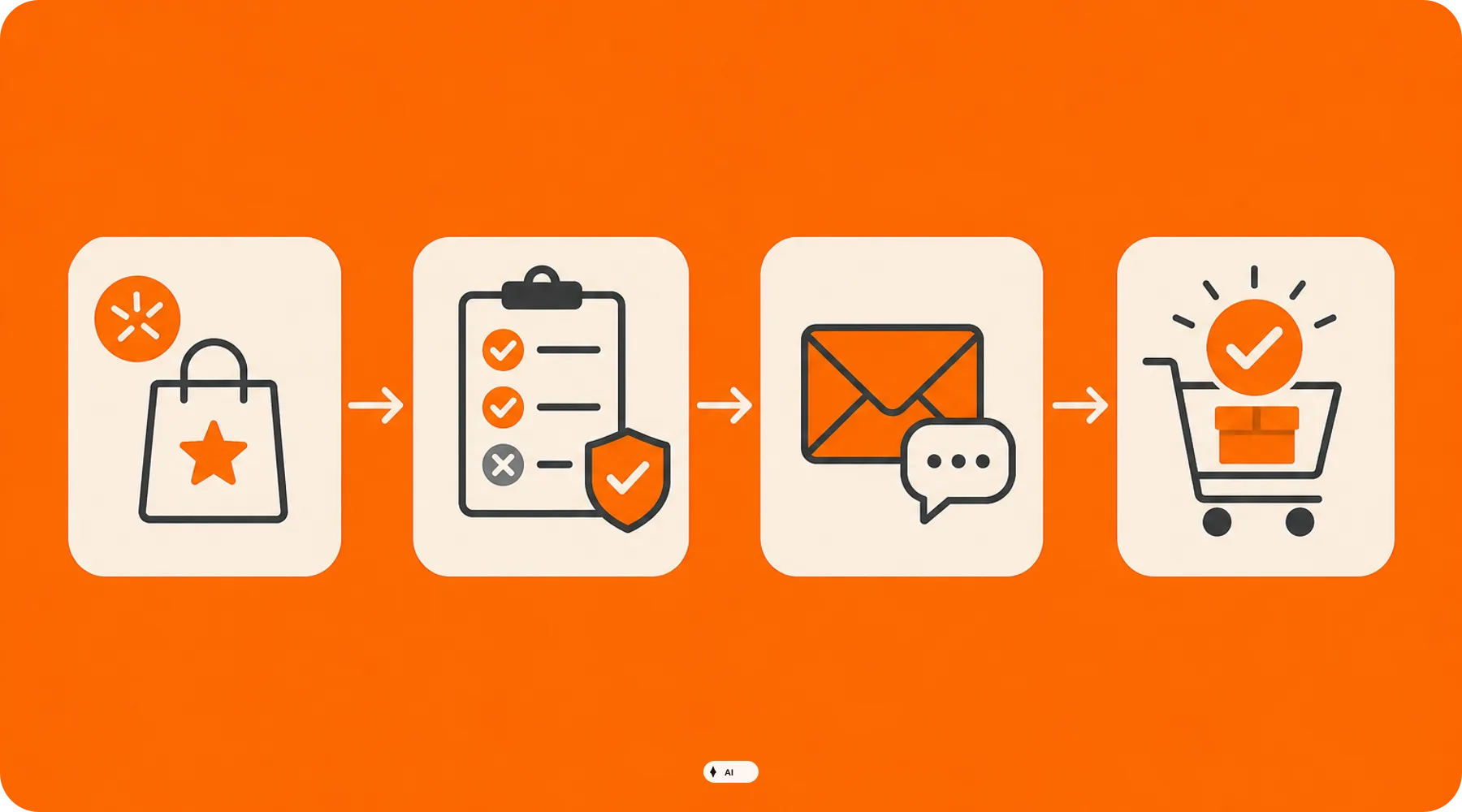
Shopify Messaging bundles email and supported SMS campaigns as well as pre-built marketing automations. This includes, among others, journeys for abandoned product views, shopping carts, and checkouts.
Centralized management makes the work easier but does not prevent content overlaps. Shopify explicitly points out that parallel active automations can, for example, trigger duplicate welcome messages.
For peak campaigns, the number of workflows is therefore not the decisive factor. What is relevant is whether each message fulfills a clear task and is stopped in time as soon as the recipient has purchased or is no longer part of the target audience.
1. Inventory All Active Journeys
Begin with a complete inventory in Shopify Messaging, Shopify Flow, and all connected CRM apps. Also record older workflows that are only activated seasonally or react to rare events.
Document for Each Automation
Trigger: Which customer event starts the journey?
Goal: Should the message encourage a first purchase, checkout completion, repurchase, or reactivation?
Channel: Is an email, an SMS, or a message via a third-party app sent?
Exclusions: Who must not, or no longer, receive the message?
Responsibility: Who controls content, discount, landing page, and result?
Look especially for workflows with a similar trigger event. A welcome series from an external app and an additional Shopify automation can target the same person within a few minutes.
Practical Check
Create a test profile with a clearly identifiable address and go through the registration, product view, shopping cart, and checkout yourself. Afterwards, check not only the receipt of the messages, but also their order, sender, links, and cancellation logic.
2. Test Triggers and Purchase Stops
A profitable automation doesn't just react to a start signal. It must also recognize when its task is complete and another contact would be unnecessary or contradictory.
JourneyImportant TestTypical Peak RiskWelcomeRegistration and marketing statusDuplicate greeting or multiple discountsProduct ViewProduct viewed but not purchasedAdvertising for items that are now out of stockShopping CartItem in cart, order is missingMessage despite interim purchaseCheckoutCheckout started and abandonedOutdated price or invalid promo codePost-purchaseOrder fulfilled or specified period reachedToo-early cross-selling before delivery
Plan Delay Times as Part of the Campaign
Do not evaluate delay times in isolation. If newsletters, retargeting ads, and automations run simultaneously, a technically correct journey can still lead to an excessively high contact frequency.
Therefore, plan a joint sending logic for promotional phases. Define which transaction or abandonment message takes priority and when general campaign communication should be put on hold.
3. Secure Messaging Budget and Access Rights
Email automations in Shopify Messaging are generally counted against the monthly email quota. Automations for abandoned checkouts are excluded from this and, according to Shopify, are not counted against this quota.
Supported SMS automations are billed per sent message. The spending limit that can be set in Shopify Messaging only generates a notification: it does not automatically stop sending and further costs.
Check Permissions Before Vacation and Peak Cover Periods
To fully create and edit marketing automations, the Basic plan or higher, Shopify Flow, and appropriate permissions for Marketing and Flow are required. Many edits must also be made on a desktop device.
Before vacation and peak periods, check whether at least one backup person can deactivate automations, correct templates, and view reports. Avoid shared accounts and assign only the permissions that are actually needed.
4. Strengthen Deliverability Before the Volume Spike
Confirm and authenticate the sender domain early. Shopify points out that domain verification for third-party domains can take up to 48 hours and that an authenticated domain removes the "via shopifyemail.com" addition.
Do not increase your sending volume for the first time on the day of the promotion. Shopify recommends, especially for new senders or rapidly growing volume, to target active contacts first and build up the sender reputation gradually.
Test the Most Active Target Audience First
Start with recipients who have recently purchased or interacted with your emails. Monitor bounces, unsubscribes, spam complaints, and clicks before expanding your reach.
Large lists are not a sign of quality if a high proportion no longer responds. A smaller, active recipient base can be more valuable for deliverability and contribution margin than maximum reach.
Important
A successful test send only proves that the message arrives technically. In addition, check mobile display, personalized content, product availability, discount validity, and the complete path to the completed checkout.
5. Define Success and Shutdown Rules
Do not evaluate automations solely based on open rates. The critical factors are clicks, orders, revenue, applied discounts, unsubscribes, and the question of whether the journey generates an additional contribution margin.
Define warning thresholds before the start of the campaign. A sudden increase in unsubscribes, broken links, sold-out promoted products, or an invalid discount should trigger an immediate review or pause.
Analyze Automations Separately
Use clearly distinguishable links and discount codes for each journey, as far as this fits your setup. This prevents revenue from being lumped in with the overall CRM, even though only individual messages are performing profitably.
Furthermore, document after the promotion which journey can continue to run unchanged. Seasonal texts, promotional prices, and time-limited landing pages should be removed or replaced immediately after the campaign ends.
What Shop Operators Should Check Now
✓ Open Shopify Messaging and inventory all active automations.
✓ Compare them with workflows from Shopify Flow and external CRM apps.
✓ Test every start and stop signal with your own customer profile.
✓ Check the sender domain, links, discounts, and mobile display.
✓ Plan email and potential SMS costs for the expected peak volume.
✓ Assign responsible persons, backups, and concrete warning thresholds.
✓ Schedule the deactivation of seasonal content already.
Thinkideas View
Prior to peak season, do not prioritize additional automations, but rather the three journeys closest to revenue: checkout abandonment, cart abandonment, and post-purchase. Only when the triggers, exclusions, and outcomes of these core journeys are resilient is a more complex CRM orchestration worthwhile.
Conclusion
Shopify Messaging creates a more centralized workspace for campaigns and automations. However, the setup only becomes profitable with clean stop logic, authenticated senders, controlled costs, and clear responsibilities.
Start with a complete inventory and then perform a real end-to-end test of your most important journey. Errors you find now will not impact your peak reach or your customer relationships.


